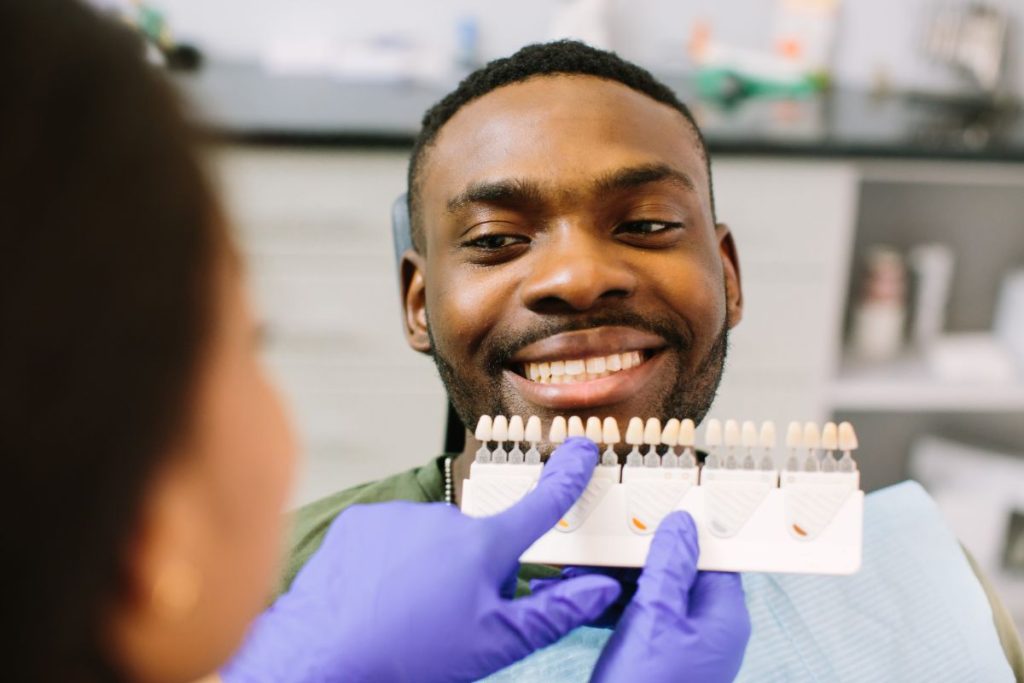
Every dentist knows that moment during a dental shade matching case: the restoration seats perfectly, the margins are clean, and the occlusion feels good.
But then the patient lifts the mirror, and your stomach drops when they say the new restoration looks a shade too light or too dark against their other teeth.
What follows is an awkward pause, a patient whose expectations weren’t met, and an urgent call to the lab to fix it as soon as possible.
Getting the colour right the first time is not luck. It’s effective communication, the right room, and experienced hands. At Watersedge, we’ve refined our process from 50+ years of combined shade matching experience and thousands of custom shade cases.
What follows is why dental shade matching goes wrong, what a mismatch actually costs a practice, and how the right lab partnership prevents the remake before it starts.
- What Dental Shade Matching Actually Involves
- When Shade Matching Goes Wrong: The Real Cost to a Practice
- Why Shade Mismatches Happen
- What Good Colour Communication Between Dentist & Lab Looks Like
- The Technology That Removes the Guesswork
- What to Expect From a Lab That Takes Shade Seriously
- How Watersedge Dental Laboratory Approaches Shade Matching
What Dental Shade Matching Actually Involves
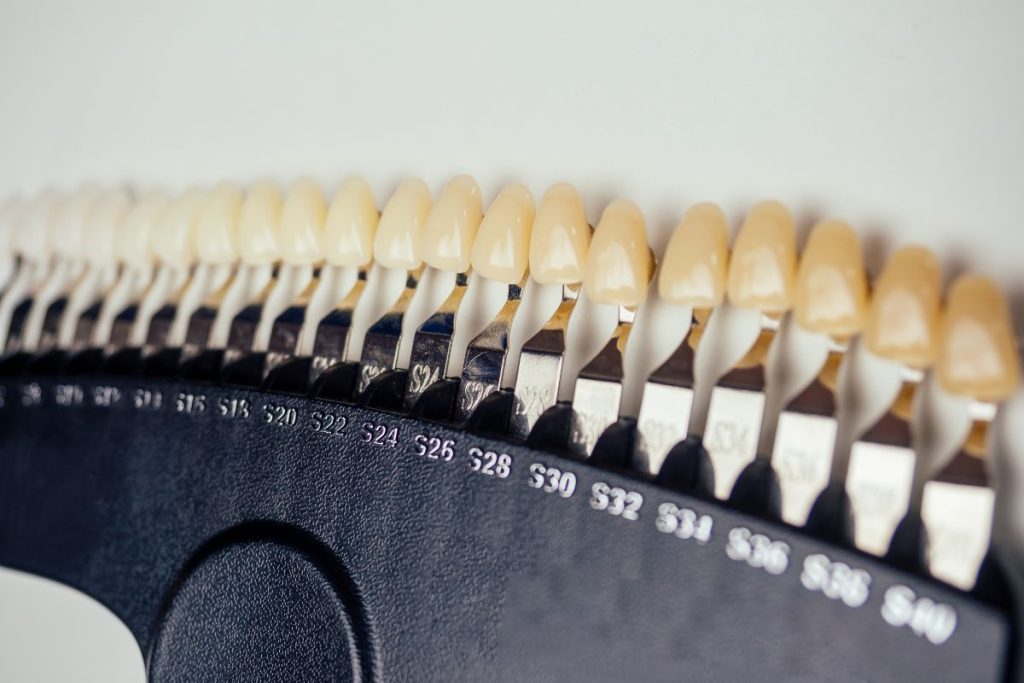
Tooth colour breaks down into three properties: hue, chroma, and value.
Hue is the base colour family. Chroma is the intensity, or saturation, of that hue. Value is the relative lightness or darkness of the tooth, and it is the property the eye reads first from across the room.
Of the three, value is the most important. As Watersedge founder Rob Waters, who has matched shades for over 30 years, puts it:
“If you have matched value, 90% of the time that crown’s going to go in, even if chroma and hue are slightly off … but if you’re off with value, there’s no way that crown’s going in. Nailing value is the single most important part.”
But the restoration’s colour is only the start. There’s translucency at the incisal edge, a halo effect near the tip, and surface texture that all read differently depending on the light.
Those characteristics also shift with age: a younger patient’s anterior teeth are more translucent at the edge, while an older tooth becomes denser and reads more opaque.
Getting all of that onto a single restoration is the real work of shade matching.
When Shade Matching Goes Wrong: The Real Cost to a Practice
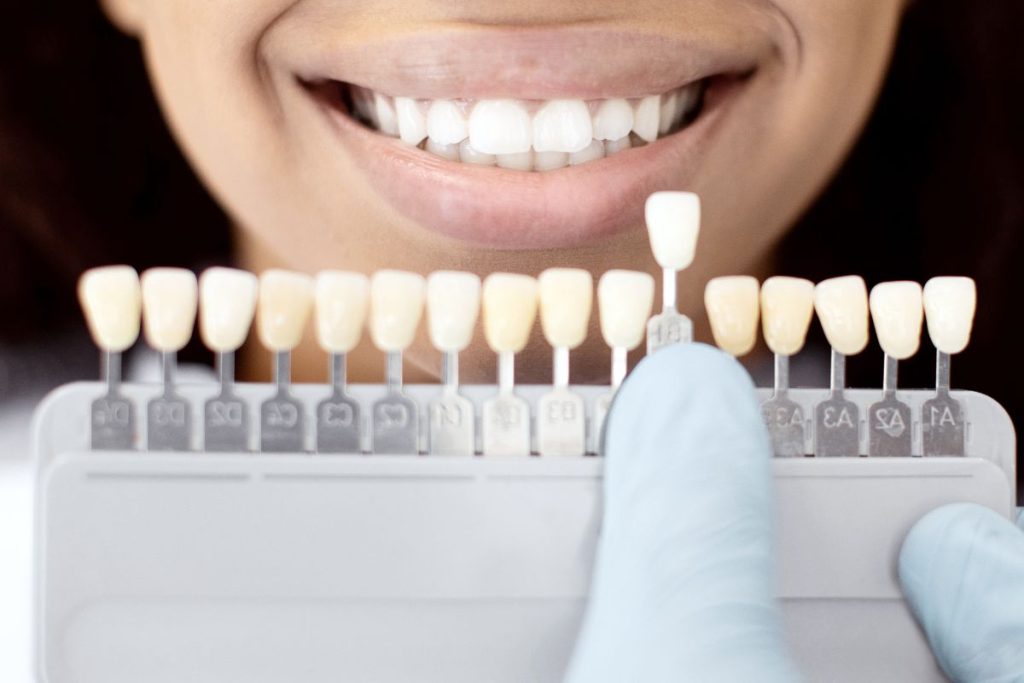
A shade miss is rarely just a colour problem. It’s also a scheduling problem, a chair-time problem, and a trust problem.
When a patient books their seating appointment, they expect to leave with a finished tooth. If the restoration goes in and the colour is off, there’s often a panicked call to the lab asking for the case to be corrected today.
Not only is the seating appointment lost, but the operatory schedule backs up behind it. The patient reschedules, and every additional hiccup chips away at their confidence in your practice.
However, the emotional weight is easy to underestimate. For many patients, an anterior restoration is a significant financial investment, and plenty of people are anxious in a dental chair to begin with.
When the colour is wrong on delivery day, that patient isn’t just disappointed. They’re also frustrated with the practice, and that frustration gets directed at the dentist, not at the lab the patient never sees.
A predictable shade protects your clinical relationships as much as it protects your schedule.
Why Shade Mismatches Happen
The reality is that the cause sits on both sides of the case, and naming it is the first step to preventing it.
Operatory-Side Causes
The usual culprits are the environment and the record.
Treatment rooms are painted, lit, and decorated to keep patients calm, not to read colour accurately. A bright wall, coloured scrubs, or a patient’s red lipstick all pull the eye. Teeth also dehydrate and brighten during a long appointment, so a shade taken late reads lighter than the tooth truly is.
Add rushed photography or an incomplete prescription, and the lab is working from a flawed record before it starts.
Lab-Side Causes
Here the failure points are weak colour communication, no defined shade protocol, and inconsistent layering or staining from one technician to the next. A lab without a repeatable process is guessing, and guessing doesn’t scale.
Metamerism
Sitting underneath both is metamerism: two colours that match under one light source but diverge under another. It’s why a restoration approved under the lab’s lighting can look wrong under the operatory light, and it’s one of the most common reasons a shade that seemed right on paper fails in the mouth.
What Good Colour Communication Between Dentist & Lab Looks Like
Strong shade communication is a two-way exchange, not a handoff.
A tooth photographed on its own can’t be shaded reliably, because the camera, the lighting, and even the screen the image is viewed on all distort colour.
The single most useful thing a practice can send is a high-resolution photograph with the chosen shade tab held right next to the tooth being matched.
The tab in the frame gives the lab a known reference: it can be compared against the identical tab on the bench, which shows immediately whether the match is accurate and by how much it’s off.
How the tab is held matters, too. Positioned just under the lip, it captures the shadowing the lip casts across the tooth, which a tab held out beside the mouth misses entirely.
Cross-polarized photography, which cuts surface glare, and short notes on translucency and surface texture make the record stronger still. None of this is assumed knowledge, which is why a great dental lab will coach for it.
Watersedge has run lunch-and-learns to coach dental clinics’ staff, and will call an office that’s consistently holding the tab incorrectly, because the practice’s success on colour and the lab’s are the same thing.
When a case is genuinely difficult, the right move is often to send the patient to us for an In-Lab Custom Shade & Stain Consultation, so our ceramist can map the shade in person.
The Technology That Removes the Guesswork
Digital tools have earned a real place in the shade workflow, as long as everyone’s clear about what they do and don’t solve.
Spectrophotometers & Colourimeters
Spectrophotometers and colourimeters, such as the VITA Easyshade, capture a shade reading electronically, and digital shade analysis through an intraoral scanner can do something similar.
In practice, we’ve found these devices tend to return too much information: a single tooth can come back mapped as six, seven, or eight different shades, which can’t be translated into a build-up.
However, they’re genuinely helpful in establishing a baseline, and specifically in confirming value.
If a scan shows the body of the tooth is largely one value group, the lab can work confidently within that range. For a single posterior unit outside the aesthetic zone, a digital shade is often all a case needs.
Shade Systems & Fast Filtering
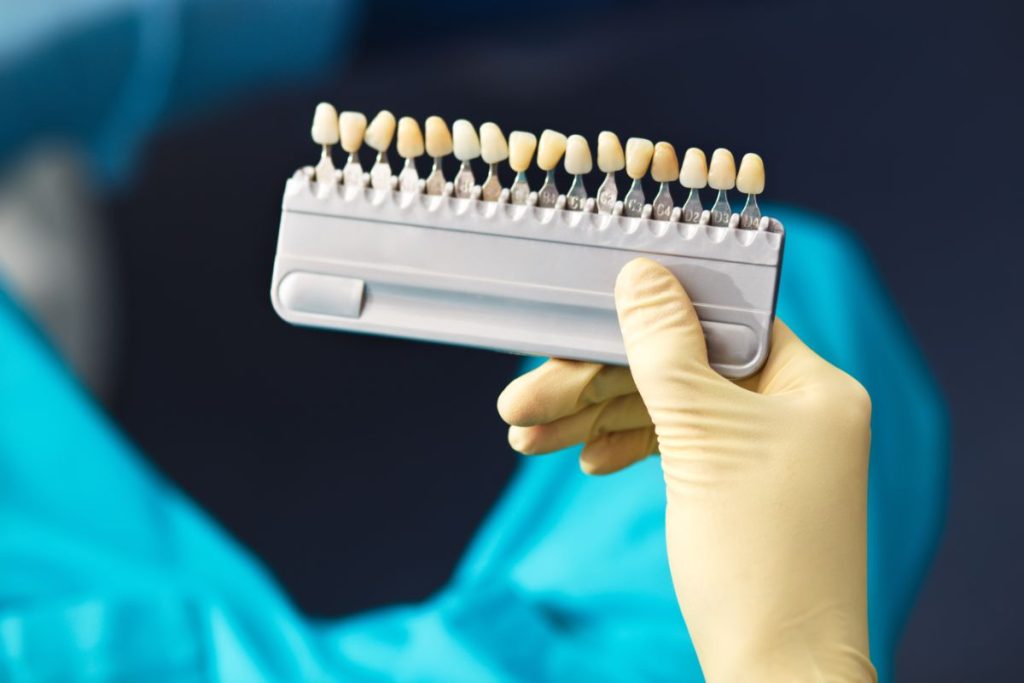
The eye becomes confused when it studies too many colours at once, which is exactly why the VITA shade systems are built the way they are. The classical guide, with 16 shades, lays every tab out together.
The 3D-Master, with 26 shades, has you establish value first, then remove the shade tabs outside that value group before refining chroma and hue. This way, a confident shade read happens in seconds, before fatigue and second-guessing set in.
From there, CAD/CAM milling and custom layering and staining turn that read into a reproducible result rather than a subjective one.
Highly-Experienced Human Judgement
For anterior and high-aesthetic cases, we’ve found that an experienced set of human eyes still leads.
When we previously trialled a spectrophotometer, our technicians consistently found their own reads matched more closely than the device’s. What we concluded is that shade matching is a learned skill, and no tool yet replaces decades of translating what the eye sees into ceramic laid down by hand.
What to Expect From a Lab That Takes Shade Seriously
When considering a lab partner, here’s what separates the ones with a real shade protocol from the ones improvising case by case.
- Defined shade protocol: Ask what actually happens when a shade comes in. An experienced lab can walk you through their repeatable process rather than just answering “we’ll match it.”
- Willingness to review before fabrication: Ask whether they’ll check your photos and prescription up front and flag a case when the shade information looks incomplete. Catching a thin record before the build begins can avoid a problem on delivery day and a remake.
- Clear remake policy: Ask how remakes are handled and how quickly. A lab confident in its colour work will give you a straight answer on turnaround instead of hedging.
- Consistent technician assignment: Ask who’s taking the shade and building the case. Senior ceramists on aesthetic work, with the same hands on your cases, is the clearest signal that colour is treated as a discipline and not just another step on the bench.
If a lab can’t answer these cleanly, that’s worth paying attention to.
How Watersedge Dental Laboratory Approaches Shade Matching
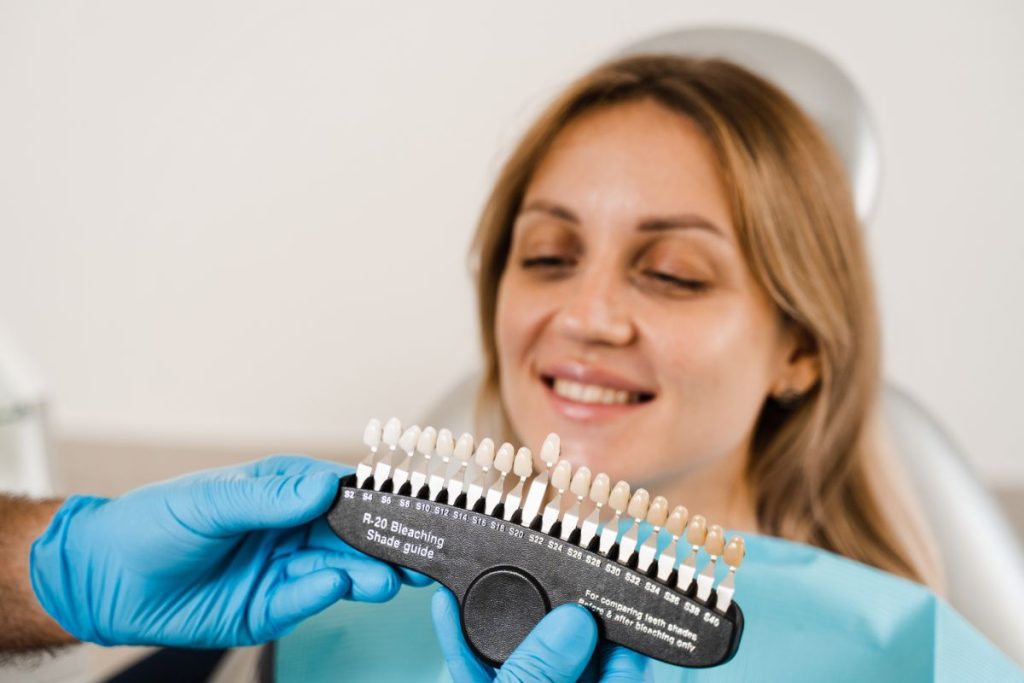
We’ve built our shade process around removing the variables the operatory can’t control. Here’s a detailed look at what that looks like in practice.
Dedicated Shade-Matching Room
Rather than a chair rolled into a corner, we match shades in a room set up like a small operatory. It has an exterior wall of windows for natural light and colour-corrected daylight fixtures, so the room reads true even on an overcast day.
Patients are given a grey smock to neutralize the colour of their clothing, and a poster in both the waiting area and the shade room shows how surrounding colour changes perception, so the patient understands the process before the tab comes out.
The Right Guides for Every Patient
We have half a dozen shade guides on hand, including Chromascope and dedicated bleach tabs for the ultra-white restorations most offices can’t match.
This is well beyond the single guide that many practices own, and it’s what lets our team map a patient whose shade doesn’t sit neatly on a standard guide.
Experienced Hands & Built-In QA
The people matter as much as the room. Our Ceramic department lead and assistant supervisor have 20+ years of experience, and they personally handle the vast majority of custom shade cases.
Our quality assurance team sits directly next door and can step in on a difficult case in seconds, and every case leaving the lab passes through that QA checkpoint.
The Verification Appointment
After a custom shade is taken, we invite the patient back at no charge for a verification appointment to view the finished restoration and hold it against their adjacent teeth before it’s ever sent to the dentist.
Nothing is placed in the mouth, but the patient sees the result, signs off on it, and small adjustments can be made to take the case from close to correct.
Acceptance of the restoration in the verification appointment is nearly universal, and it has effectively eliminated urgent fixes on delivery day.
For the dentist, this results in a calmer, better-prepared patient, and the case is far more likely to be completed without issue.
Assessment Beyond Colour
The custom shade appointment also doubles as an assessment.
Our team checks whether enough tooth structure was reduced for the chosen material, and whether a dark underlying stump or a metal post is showing through the opaque temporary, either of which can throw the final colour.
Since dental technicians work within a technical scope and not a clinical one, those findings go back to the dentist as options, from a reduction coping that lets the dentist trim excess in seconds to a conversation about material choice, so the case is solved before it becomes a problem.
Fast Adjustments & Remakes
If a shade does still need adjusting, our lab stands behind the work.
A minor stain adjustment can often turn around in about 24 hours, and a full remake in roughly 3-5 business days. For genuinely urgent cases, we can handle them same-day with the patient coming directly to the lab.
Partner With a Lab That Gets Colour Right
Consistent colour isn’t the product of one clever tool or a lucky match on the day. It comes from a lab that treats shade as its own discipline, backed by the right room, a full range of guides, trained ceramists, and a process designed to surface problems long before your patient is in the chair for delivery. That’s the standard worth holding a lab partner to.
Partner with Watersedge to see how a defined shade process fits into your workflow, or contact us to talk through a specific case. We are always glad to help you get it right the first time.